
Common Causes of Failure
- Appliances often stop working because trapped lint, dust or food debris restricts airflow or water movement and interrupts normal operation.
- Worn seals, pumps and moving parts can cause leaks, poor cooling or a drum that stops turning.
- Failed heating parts, temperature sensors or controls can prevent an appliance from starting or completing its cycle.
How Small Restrictions Interrupt Appliance Cycles
Common faults leave different clues
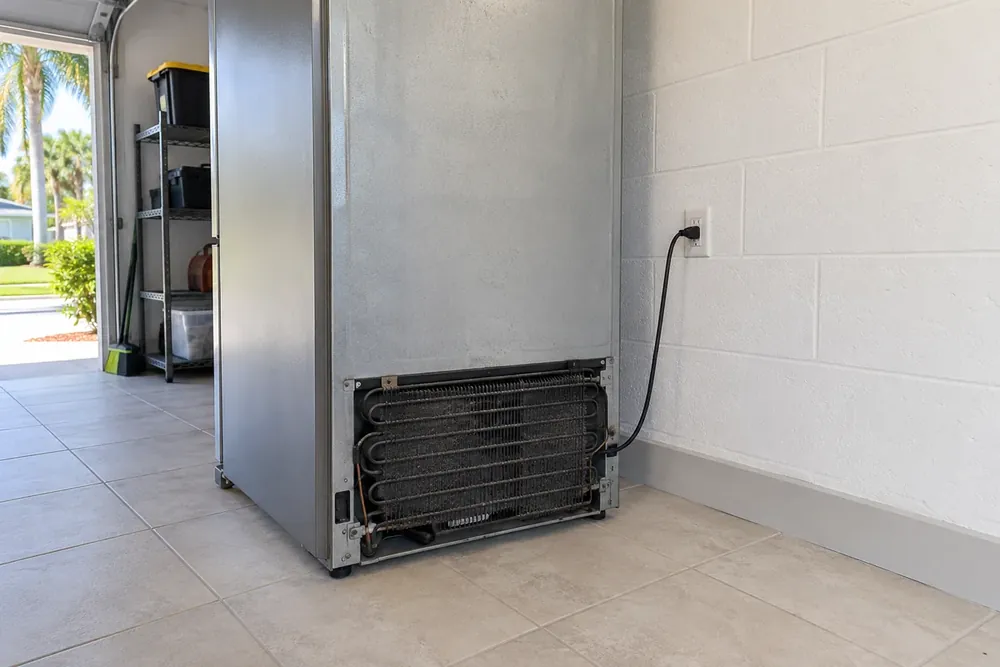
Blocked passages, worn moving parts and failed controls usually explain why an appliance stops completing its job. Common reasons for a refrigerator not cooling include dust restricting heat release and ice blocking air circulation. A symptom points your technician toward tests; the symptom alone does not identify the failed part. Even two appliances showing the same display code can need different repairs because codes depend on the brand and model.
| What you notice | What usually causes it | What the visit does |
|---|---|---|
| Refrigerator runs warm | Dust usually covers the condenser coils, which release heat, and slows heat loss. | Your technician checks coil condition and cooling performance. |
| Refrigerator has warm shelves | A stalled circulation fan often stops cold air reaching the food compartment. | Fan movement and temperature distribution are tested. |
| Refrigerator develops heavy frost | A failed defrost heater often lets ice block the cooling passages. | Your technician tests the defrost system and its controls. |
| Washer leaves standing water | Debris often blocks the pump filter and prevents water leaving the drum. | The drain path and pump are inspected. |
| Washer will not spin | A faulty lid or door latch often prevents the machine detecting a secure closure. | Your technician tests the latch and cycle operation. |
| Washer shakes heavily | Worn supports often let the tub move excessively during spinning. | Tub support and movement are assessed. |
| Dryer runs hot | Packed lint often restricts the exhaust, trapping heat and triggering protective shutdown. | Your technician checks airflow and heat protection. |
| Electric dryer tumbles without heat | A failed heating element often prevents the air warming. | The heating element and temperature controls are tested. |
| Dryer drum stays still | A broken drive belt often stops the motor turning the drum. | The belt, supporting rollers and motor operation are examined. |
| Dishwasher leaves dirty dishes | Food often blocks spray openings, reducing the water reaching dishes. | Your technician checks spray coverage and water circulation. |
| Dishwasher holds water | Debris often blocks the filter or drain path and slows emptying. | The filter, drain pump and drainage are checked. |
| Dishwasher leaks at the door | A damaged door seal often lets wash water escape. | Seal condition and door alignment are inspected. |
| Electric oven cooks unevenly | A failing bake element often leaves part of the oven underheated. | Your technician tests the element and heating pattern. |
| Oven temperature drifts | A faulty temperature sensor often sends the controls an inaccurate reading. | Actual temperature is compared with sensor operation. |
| Electric stove burner stays cold | A failed surface element often stops that cooking zone heating. | The element and its control are assessed. |
| Microwave will not start | A worn door safety switch often prevents operation with the door closed. | Your technician checks the door safety system. |
| Microwave runs without heating | A failed magnetron, the part producing cooking energy, often prevents heating. | The heating system is professionally assessed. |
| Microwave plate will not rotate | A damaged drive coupling often stops the motor turning the plate. | The plate support and drive mechanism are inspected. |
| Ice maker produces small cubes | A restricted water filter often reduces the water reaching the ice mold. | Your technician checks water flow and fill operation. |
| Ice maker stops filling | A failed water inlet valve often prevents water entering the mold. | The appliance's water valve and fill controls are tested. |
| Ice maker leaves cubes in the mold | A stalled release mechanism often prevents the finished cubes dropping. | Ice release and temperature sensing are examined. |
| Freezer develops frost around its opening | A worn rubber seal often admits moist air that freezes inside. | Your technician checks the seal and lid or door fit. |
| Freezer grows warm behind heavy ice | A defrost fault often lets ice obstruct air movement. | Defrost operation and the circulation fan are tested. |
| Freezer clicks without cooling | A failed start device often prevents the compressor, which drives cooling, starting. | The start device and compressor operation are assessed. |
Heat and moisture change the operating conditions
Heat makes refrigeration equipment work harder, according to the National Weather Service's heat guidance. A garage or lanai location is useful information during the call. Whirlpool notes that a refrigerator unsuited to garage temperatures can run excessively in hot weather or lose cooling performance. Your technician compares the model's intended conditions with its location.
Humidity also affects exposed metal. UF/IFAS describes how moisture reaches metal through scratches in appliance enamel and allows rust. Visible corrosion is a reason to describe the appliance's condition during the call, without assuming which internal part has failed.
Storms can interrupt power and damage appliances
Thunderstorms bring frequent lightning to Southwest Florida during the rainy season, as the National Weather Service describes. NOAA identifies June 1 through November 30 as Atlantic hurricane season and warns that storms can interrupt electricity. A loss of supply stops an otherwise working appliance.
For a household with LCEC service, use LCEC's outage reporting options to report a power interruption. Tell your technician whether the appliance stopped during an outage or remained faulty after power returned. UF/IFAS also warns that electrical-current surges during storms can damage appliances; the timing is a clue, not proof of surge damage.
Seasonal homes need attention to moisture
An extended absence can leave moisture damage unnoticed. UF/IFAS says unoccupied Florida homes are more susceptible to mildew, pests and storm damage. When calling about an appliance after months away, describe whether it stayed running or was shut down. That history helps separate a new operating fault from a problem discovered on returning.
Simple observations help without delaying the call
Call as soon as an appliance behaves abnormally. Switch it off at its controls, or unplug it only when the plug is easy and dry to reach. Keep a warm refrigerator or freezer closed. A fully closed door, a clean dryer lint screen and a clean dishwasher filter are useful routine checks.
Read any visible display code during the call. Leave internal testing to your technician. An appliance exposed to floodwater stays off until professionally checked, following CPSC's wet-appliance precautions. Do not touch a wet appliance that remains plugged in.